Blackjack
- 4.5
- Rating
- 5.00M
- Installs
- Free
- Price
 Analysis by App-foxy
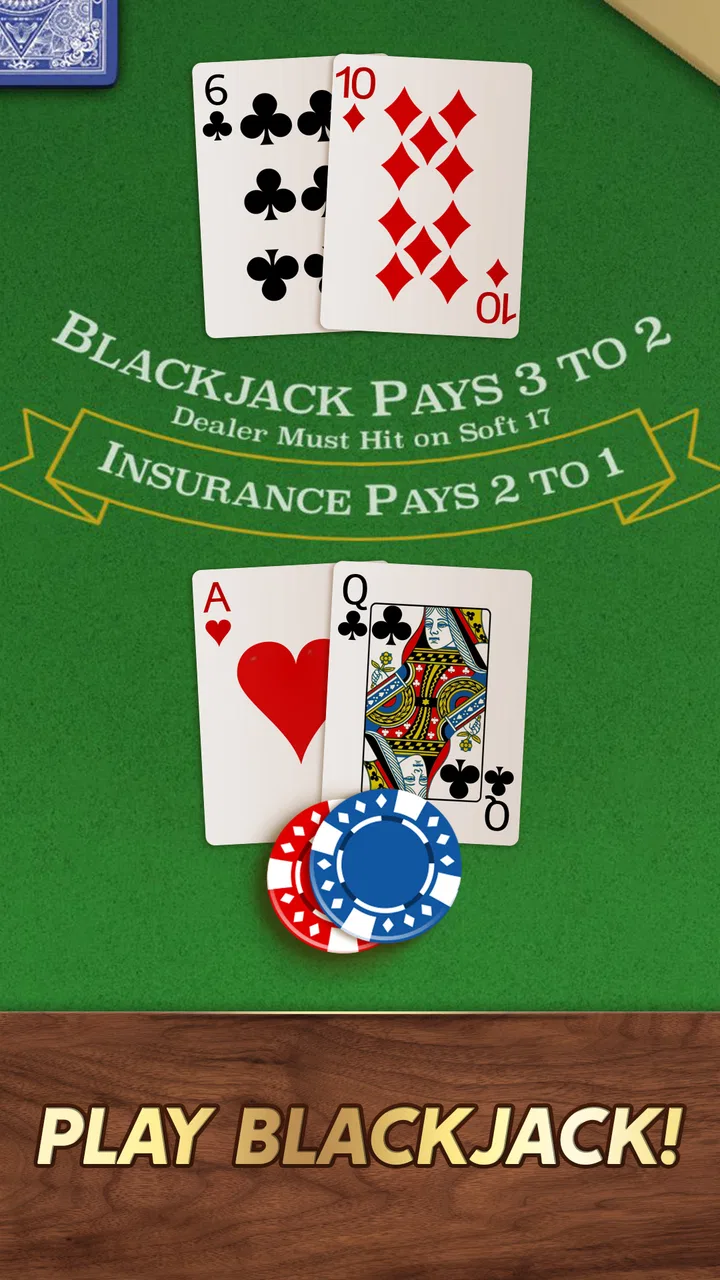
I installed Blackjack expecting a quick card game rather than a full casino simulation, and that is exactly where it fits best. Developed by Tripledot Studios Limited, this free game turns a familiar blackjack hand into a short repeatable routine: make a choice, see the result, collect the outcome, and decide whether to play again. The store summary also points to gift cards, so the appeal is not limited to beating the dealer; there is an extra reason to keep returning.
That reward angle deserves a realistic look. I found the game most enjoyable when I treated it as a few spare minutes of entertainment, not as a dependable way to earn something valuable. The card play is easy to understand, the rounds move quickly, and the interface is aimed at casual players. At the same time, the Teen content rating, optional purchases, and reward-focused design mean it is worth approaching with clear limits. If you want a focused blackjack pastime on a phone, it has a sensible place. If you want a deep strategy game, a social card table, or a completely distraction-free experience, another option may suit you better.
The first hand gets you moving quickly
The first useful quality is how little preparation the game demands. Blackjack is already familiar to many players, and the central decision is straightforward: judge your hand, consider the dealer’s visible card, and choose whether to take another card or stop. That makes the opening action feel immediate instead of buried under a long tutorial or complicated deck-building system.
You May Also Like

 Blood Strike: 2.5 Anniversary
Blood Strike’s Loadouts Turn Every Drop Into a Tactical Gamble
A close look at Blood Strike’s custom loadouts: how fast access to signature weapons reshapes its battle royale rhythm, rewards preparation, and narrows the gap between fights.

 Pandora - Music & Podcasts
Pandora’s Music Is Easy to Start, but Harder to Recover
Pandora’s strength is its low-effort path from a seed to a station. Its weak spot is how much confidence it asks you to place in connection, setup, and quiet recovery.

 8 Ball Pool
 Is Built on Rivalries, Rematches, and Routine
A close look at the rivalries, rematches, shared routines, and unanswered safety questions that turn a quick pool match into a persistent mobile community.

 Samsung Music
’s Quiet Strength Is Playing What You Already Own
Its reach comes less from spectacle than from dependable access to a personal library. That simplicity is both the app’s strongest retention engine and its ceiling.

 AccuWeather: Weather Radar
AccuWeather Review: A Quick, Clear Forecast for Everyday Decisions
For everyday plans, the best forecast is the one you can understand quickly. AccuWeather makes rain timing, radar, and local conditions easy to act on, with a few trade-offs.

 Hill Climb Racing
Why Hill Climb Racing Still Turns Crashes Into One More Run
A tiny car, a bumpy hill and one more upgrade: Hill Climb Racing keeps resurfacing because its simple chaos makes every near-miss feel personal.
More From Our News Desk



I like this simplicity for short sessions. I can open the game while waiting for an appointment, play a hand, and understand what happened without committing to a long campaign. The card format also makes each round easy to follow visually. Your attention stays on the current hand rather than on a map, inventory, or collection screen.
There is still a small mental adjustment for anyone who has only played casual card games. Blackjack is not about collecting the most cards or building a permanent deck. Every hand is a fresh calculation around the value of the cards already on the table. The best decision can change depending on the dealer’s exposed card, so tapping quickly without looking is usually less satisfying than taking a moment to read the situation.
One practical habit helped me enjoy it more: I decide my basic intention before tapping. If I am playing casually, I look at the total, check the dealer’s visible card, and make one deliberate choice instead of treating every button press as an automatic reflex. That tiny pause gives the game more texture and prevents the session from becoming a blur of taps.
Why the feedback rhythm keeps another hand tempting
The core rhythm is compact. I act on the hand, receive an immediate result, see the reward or setback, and then return to a new decision. A win gives the next round a little momentum; a loss creates the familiar urge to try one more time and correct the previous choice. That action-feedback cycle is the strongest part of the design.
It works because blackjack naturally provides clear feedback. A card either improves the position, pushes the total toward danger, or settles the hand. The dealer’s result gives the round a definite ending, so there is little ambiguity about why the reward changed. Even when the outcome is not what I wanted, the game rarely leaves me wondering whether the hand is finished.
The trade-off is that the same clarity can make the experience repetitive. There is no need to learn a new rule set from round to round, and the basic action remains similar throughout. Players who enjoy mastering a complex system may find the loop too narrow. I would compare it with a traditional physical deck or a more detailed blackjack simulator this way: the physical version offers more control over the atmosphere and pace, while a simulator may offer more rules and settings; this mobile game is better at removing setup and getting straight to the next hand.
The reward feedback also changes how I judge a result. In an ordinary offline game, winning a hand can be enough. Here, the possibility of gift cards gives a win an additional purpose, even if the immediate entertainment remains the main reason to play. I recommend separating those two expectations. Enjoy the card decisions first, and regard the reward path as an extra rather than the only justification for every session.
Rewards add purpose, but they should not control your pace
The store summary presents the game as blackjack with a gift-card incentive, and that makes it different from a plain digital deck. For some players, that extra layer will make routine hands feel more worthwhile. It can also give a casual player a reason to return after closing the app, because the session is connected to progress beyond the current table.
My advice is to treat the reward system as a reason to check in, not as a reason to play without limits. A reward-oriented loop can make a short break stretch longer than planned, especially after an unlucky hand. The most useful boundary is simple: decide how long you want to play before starting, and stop at that point whether the last hand won or lost.
There is another important distinction between entertainment value and spending. The game is free to install, but its in-app purchases range from $0.99 to $199.99 per item. That wide range is a strong reason to keep purchases under conscious control. I would not open the purchase area casually during a losing streak, and I would use device-level purchase protections if the phone is shared with a child or another family member.
This is also where the Teen rating matters in practical terms. It does not make the game unsuitable for every teenager, but it does make the app a poor choice for anyone who wants a completely child-oriented card experience. Adults deciding whether to place it on a family device should consider the reward framing and purchase options together, rather than looking only at the fact that the game uses simple cards.
The reset is the real reason the loop continues
After a hand ends, the game’s most important design decision is that it does not make the result feel final. The table resets, the next hand becomes the new problem, and the previous outcome turns into a small piece of momentum. This is why the game can fill a few minutes so easily: there is no large commitment between one round and the next.
I noticed two different kinds of reset. The first is useful and healthy: I finish a hand, put the phone down, and can return later without needing to remember a complicated storyline. The second can be less helpful: a loss makes the next hand feel like an unfinished correction. The game is at its best when I choose the reset myself rather than letting the previous result choose for me.
For an everyday scenario, imagine waiting for a train that is delayed but not delayed enough to justify starting a long game. A single blackjack hand fits that gap. If the train arrives, I can stop without abandoning a mission or losing a carefully built run. If the wait continues, another hand begins immediately. That flexibility is more valuable than it sounds, especially compared with card games that require a longer match or multiplayer opponent.
The same reset makes it less suitable for players seeking long-term progression. A story-driven card game gives each session a broader purpose, while a collectible card game may reward deck construction and experimentation. This game’s satisfaction comes from repeated decisions and outcomes, not from building a character or developing a permanent strategy library.
Small techniques that make the hands more satisfying
The most obvious tip is not to treat every hand as an invitation to tap repeatedly. Look at the dealer’s exposed card before deciding. A strong dealer card changes the pressure of the situation, while a weaker visible card can make holding a reasonable total feel more attractive. I am not presenting this as a guaranteed winning formula; it simply makes the decision more deliberate.
A second useful technique is to separate learning from chasing. If I make a questionable choice, I try to remember the situation rather than immediately forcing another hand to erase the feeling of losing. The reset is valuable because it gives me a clean decision, not because it promises that the next result will repair the last one.
Third, I use short personal sessions. The game’s quick rounds make it easy to say “one more,” so a preset stopping point is more effective than relying on mood. This is especially important when rewards and purchases are both present. A short planned visit keeps the feedback rhythm enjoyable; an unplanned extended session can make the same rhythm feel tiring or financially distracting.
Finally, I would keep the app on a device that meets its requirements without expecting it to replace every kind of card entertainment. It supports Android devices running version 6.0 or later, and the current version is 2.20.01. That broad compatibility is convenient for many users, but compatibility alone does not change the game’s basic identity: it remains a lightweight blackjack loop rather than a broad card-game collection.
Who will enjoy it, and who should choose something else?
I think it is a good match for someone who already understands the basic idea of blackjack and wants fast hands with a reward-oriented reason to return. It also suits players who prefer solo games, dislike waiting for opponents, and want to stop at any moment. The free entry makes it easy to test without committing money at installation.
It is less convincing for a player who wants serious gambling realism, extensive table customization, or a competitive community. It is also not my first recommendation for anyone who finds reward loops difficult to resist. In that case, an offline card app with no purchase layer may provide a calmer experience, even if it lacks the gift-card incentive.
Compared with a physical deck, this game wins on convenience and loses on social atmosphere. Compared with a casino-style app, it feels more approachable for quick play but may not satisfy someone looking for a broad range of table games. Compared with a strategy-heavy card game, it offers faster feedback but far less variety in the decisions available. Those differences are not flaws by themselves; they define the audience.
My verdict on the complete action-to-reset loop
Blackjack succeeds because its loop is easy to feel: I make a card decision, receive a clear result, see the reward change, and face a fresh hand almost immediately. That structure explains why another session begins even when the previous one ended badly. The reset is frictionless, and the reward framing adds a little extra purpose to an otherwise familiar game.
Still, I would recommend using it with boundaries. The in-app purchase range is substantial, the Teen rating deserves attention on shared devices, and the gift-card angle should not be confused with guaranteed value. The game is most enjoyable when the card play remains the focus and the reward stays secondary.
With that expectation, I would recommend it to casual blackjack fans who want a convenient solo game for short breaks. Its average rating is 4.6 from around 137 thousand ratings, and it has passed 5 million installs, which fits the impression of an accessible game with a broad audience. I would skip it in favor of a more traditional or strategy-rich alternative if I wanted deeper rules, longer-term progression, or a purely offline experience.
For me, the best use is simple: open it for a few intentional hands, make each decision thoughtfully, enjoy the quick feedback, and close it when the planned break ends. That is where the game feels polished and honest about what it offers.
FAQs for Blackjack
01What features does the Blackjack app offer?
The Blackjack app offers a realistic gaming experience with intuitive controls and a sleek design. It includes multiple game modes, such as Classic Blackjack and Vegas Strip, and features like daily bonuses, leaderboards, and multiplayer options. Additionally, the app provides tutorials for beginners and advanced strategies for seasoned players.
02Is the Blackjack app available for both Android and iOS devices?
Yes, the Blackjack app is available for download on both Android and iOS platforms. You can find it in the Google Play Store and the Apple App Store. Ensure your device meets the app's system requirements for optimal performance and gameplay experience.
03Does the Blackjack app require an internet connection to play?
The Blackjack app can be played offline in single-player mode, which is great for practicing your skills without an internet connection. However, to access features like multiplayer games, leaderboards, and daily bonuses, an internet connection is required.
04Are there in-app purchases in the Blackjack app?
Yes, the Blackjack app offers in-app purchases. While the game is free to download and play, players can purchase additional chips, special features, and cosmetic upgrades to enhance their gaming experience. Be sure to manage your in-app purchase settings to control spending.
05Is the Blackjack app suitable for beginners?
Absolutely! The Blackjack app is designed to cater to both beginners and experienced players. It includes a comprehensive tutorial and easy-to-understand instructions to help new players grasp the basics. Additionally, it offers strategy guides and tips for those looking to improve their game.
Pros
- Engaging and realistic gameplay experience.
- User-friendly interface for easy navigation.
- Multiple game modes for varied play.
- Offline mode available for practice.
- Regular updates with new features.
Cons
- In-app purchases can be expensive.
- Occasional ads interrupt gameplay.
- Limited customization options.
- Requires internet for multiplayer.
- Tutorials could be more comprehensive.

Blackjack
Gallery